

Wisdom Tooth Removal Dentist in Anchorage, AK
Wisdom teeth can sometimes grow in without causing problems. In other cases, they may become impacted, difficult to clean, infected, painful, or harmful to nearby teeth. A dental evaluation can help determine whether removal is appropriate or whether the teeth can simply be monitored. At Four Corners Dental Group in Anchorage, Dr. Pete B. Higgins, DDS, provides wisdom tooth evaluations and removal, including surgical wisdom tooth removal when appropriate. Our goal is to understand the position and health of each wisdom tooth before deciding on treatment. For more information, contact us or book an appointment online. We are conveniently located at 3901 Raspberry Rd, Anchorage, AK 99502.

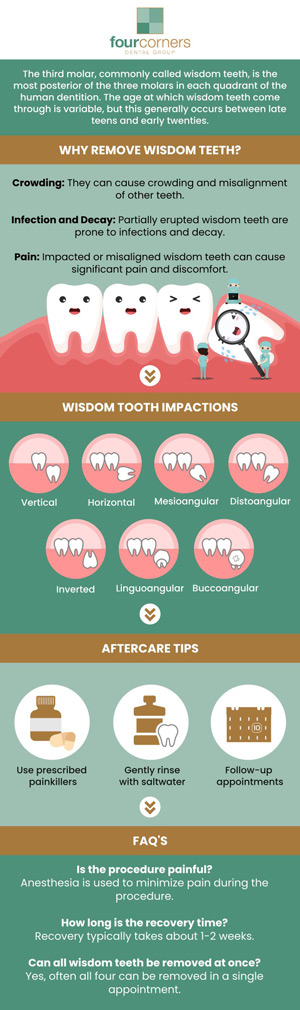
Table of Contents:
What are wisdom teeth?
How painful is a wisdom tooth?
When is wisdom tooth extraction necessary?
When should wisdom teeth be removed?
How do dentists remove a wisdom tooth?
How long does recovery from wisdom tooth removal take?
What are the possible risks of wisdom tooth removal?
How are wisdom teeth evaluated at Four Corners Dental Group?
How much does wisdom tooth removal cost in Anchorage?
Ready to schedule your wisdom teeth evaluation?
Wisdom teeth, also called third molars, are the last permanent teeth to develop. They commonly begin appearing during the late teenage years or early adulthood. Some people have enough room for these teeth to erupt normally.
Others develop impacted wisdom teeth, meaning a tooth remains partly or completely trapped beneath the gum or within the jawbone. An impacted tooth doesn’t always cause symptoms right away. That is why examination and dental imaging can be important when evaluating wisdom teeth.
If your wisdom teeth come in at the correct angle, they should only be mildly painful. If they are impacted, you will experience moderate to severe pain. Whether your pain is mild to severe, we recommend you seek dental care. Your wisdom tooth specialist will take x-rays to confirm if you need to have them removed or not. Catching potential problems early on can prevent gum damage, jaw damage, and tooth damage.
Wisdom teeth (third molars) typically emerge between the ages of 17 and 25. Because most jaws do not have enough room to accommodate these final four teeth, they often become trapped (impacted) in the jawbone or gums.
We typically recommend extraction if you are experiencing:
• Severe Jaw Pain or Stiffness: Aching pressure at the back of the mouth as the teeth attempt to erupt.
• Pericoronitis (Gum Infection): Swollen, red, or bleeding gums around a partially erupted tooth where bacteria have trapped.
• Crowding or Shifting: Pressure from emerging wisdom teeth that pushes adjacent teeth out of alignment.
• Damage to Adjacent Molars: Decay or bone loss on the neighboring second molars due to hard-to-clean trapped food and plaque.
• Cysts or Tumors: Fluid-filled sacs forming around the impacted tooth, which can damage the jawbone and surrounding nerves.
After wisdom tooth extraction at Four Corners Dental Group, patients may experience some common side effects. These typically include:
•Wisdom teeth do not automatically need to be removed simply because they are present. Removal may be considered when examination or imaging shows an existing dental problem or a meaningful risk to oral health.
• Reasons a dentist may recommend extraction include:
• Pain or tenderness around a wisdom tooth
• Repeated infection or inflammation around the gum
• Tooth decay that cannot be predictably restored
• Gum disease around the wisdom tooth
• Damage to a neighboring tooth
• Difficulty keeping the area clean
• Cysts or other disease involving the tooth
• A tooth that is positioned in a way that creates ongoing dental problems
Healthy wisdom teeth that are fully erupted, functional, disease-free, and easy to clean may sometimes remain in place with ongoing dental monitoring.
During your wisdom tooth extraction, you will be under one of the following anesthesia: local anesthesia, sedation anesthesia, or general anesthesia. This will be dependent on the complexity of your tooth extraction. You can first expect your dentist to make an incision in the gums to reveal your tooth and bone. They will then divide the tooth into smaller pieces so that it’s easier to remove. The tooth will then be removed from your gums and the site will be thoroughly cleaned. Next, your dentist or oral surgeon will stitch up the wound and place special gauze over the incision site.
After your procedure, you’ll be a little bit loopy from the anesthesia and will need to be driven home by a family member or friend. Your dentist or oral surgeon will give you careful aftercare instructions to promote proper healing. As you’re healing from wisdom tooth surgery, it’s important to take care of the extraction site. You’ll want to be very careful when cleaning your mouth to not open up the wound. For the first 24 hours, do not rinse your mouth or teeth. For about one to two weeks afterward, rinse your mouth with a gentle oral rinse or an at-home salt and water solution.
Recovery varies from person to person. Swelling, soreness, mild bleeding, and jaw stiffness may occur during the first several days after extraction. Patients often begin feeling progressively better as healing continues, although surgical sites take longer to heal completely.
Return to work, school, exercise, and a regular diet depends on the complexity of the procedure and how the individual is recovering. Patients should follow the specific instructions given after treatment rather than relying on a fixed recovery timeline.
Wisdom tooth removal is common, but no dental surgery is completely risk-free.
Possible complications can include:
• Pain and swelling
• Bleeding
• Infection
• Dry socket
• Delayed healing
• Injury to a neighboring tooth or restoration
• Temporary or, rarely, persistent changes in sensation from nerve irritation
• Sinus-related complications with certain upper wisdom teeth
• Reactions or complications related to anesthesia or sedation
Individual risks depend on tooth position, anatomy, medical history, medications, and the complexity of treatment. These considerations should be discussed before the procedure.
A wisdom tooth evaluation generally begins with a review of symptoms, dental history, health history, and medications.
The dentist examines the mouth and may use dental X-rays to evaluate factors that cannot be seen during a routine visual examination. Imaging can help show the tooth’s position, root development, surrounding bone, neighboring teeth, and other important structures.
Dr. Higgins can then discuss whether observation, treatment, extraction, or referral for more specialized surgical care is appropriate.
The cost varies because not every extraction requires the same type of treatment.
Factors can include:
• Whether the tooth has fully erupted or is impacted
• The complexity of the extraction
• How many teeth are being removed
• The type of anesthesia or sedation used
• Dental insurance or Medicaid benefits
• Other treatment needed during the visit
Four Corners Dental Group accepts several payment methods. Coverage for wisdom tooth removal can vary by eligibility, medical necessity, benefits, authorization requirements, and the patient’s specific plan.
Patients should confirm their expected coverage and estimated out-of-pocket responsibility before treatment.
Can a wisdom tooth be impacted without hurting?
Yes. An impacted wisdom tooth may cause no symptoms and may only be discovered during an examination or dental X-ray. Regular dental monitoring helps identify changes before they become more noticeable.
Is wisdom tooth removal always necessary?
No. Healthy wisdom teeth that are fully erupted, functional, easy to clean, and free of disease may sometimes remain in place with regular monitoring.
Can wisdom teeth cause infection?
Yes. Partially erupted or difficult-to-clean wisdom teeth can collect plaque and bacteria, increasing the risk of gum inflammation, infection, cavities, and other dental problems.
Where can I get a wisdom tooth evaluation in Anchorage, AK?
Patients experiencing wisdom tooth pain, swelling, infection, or concerns about impacted teeth can request an evaluation with Dr. Pete B. Higgins, DDS, at Four Corners Dental Group in Anchorage. Examination and dental imaging can help determine whether monitoring, extraction, or another approach is appropriate.
Wisdom tooth pain doesn’t always mean that extraction is necessary, and the absence of pain doesn’t always mean a wisdom tooth is healthy. A dental examination can provide a clearer picture.
Dr. Pete B. Higgins, DDS, and Four Corners Dental Group provide wisdom tooth evaluations and extractions. We are conveniently located at 3901 Raspberry Rd, Anchorage, AK 99502. Patients can contact us or book an appointment online to discuss their symptoms and treatment options.
We serve patients from Anchorage AK, Downtown Anchorage AK, Midtown Anchorage AK, Fairview Anchorage AK, Abbott Loop Anchorage AK, Eagle River AK, Campbell AK, South Anchorage AK, Chugiak AK, Spenard AK, and surrounding areas.
Check Out Our 5 Star Reviews



Additional Services You May Need
▸ General Dentistry
▸ Sedation Dentistry
▸ Invisalign Dentist
▸ Dental Implants
▸ Dental Bridges
▸ Dental Cleaning
▸ Dental Fillings
▸ Dental Crowns
▸ Dental Sealants
▸ Dentures & Repair
▸ Emergency Dentistry
▸ Mouthguards
▸ Preventive Dentistry
▸ Restorative Dentistry
▸ Root Canals
▸ Teeth Whitening
▸ Veneers
▸ Wisdom Tooth Removal
▸ Zoom Teeth Whitening


 Send Text
 How May I Help You?