

Managing Wisdom Tooth Complications in Anchorage, AK
The removal of wisdom teeth is a common dental milestone, particularly for young adults. While the procedure itself is highly routine, the surgical nature of the extraction means that intricacies and complications can occasionally arise. At Four Corners Dental Group, Dr. Pete Higgins DDS, and our team prioritize patient safety, comfort, and proactive care. We believe that thorough preoperative evaluation and meticulous surgical techniques are the keys to a smooth recovery. For more information, contact us or book an appointment online. We are conveniently located at 3901 Raspberry Rd, Anchorage, AK 99502.

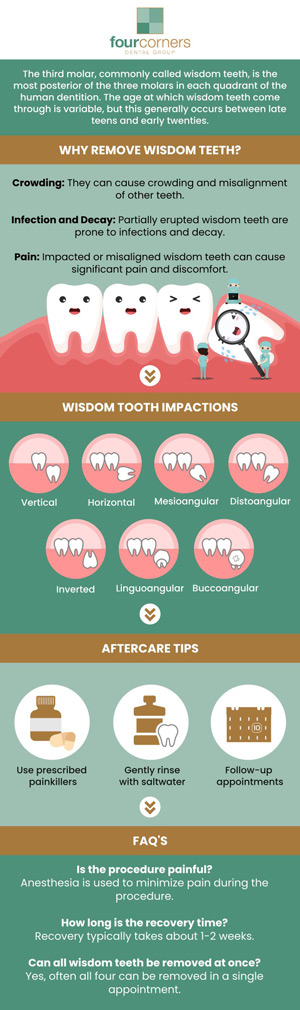
Table of Contents:
When Might Wisdom Teeth Need to Be Removed?
Navigating the Intricacies of Wisdom Tooth Extraction: A Comprehensive Guide to Potential Complications
When to Contact Our Anchorage Dental Office After Extraction
How should I keep my mouth clean after wisdom tooth removal?
What foods should I avoid after wisdom tooth removal?
Why Choose Dr. Pete Higgins for Wisdom Tooth Care in Anchorage?
Schedule Your Consultation in Anchorage Today
Having wisdom teeth does not automatically mean they need to be extracted. A dentist may recommend removal when a wisdom tooth is causing problems or has a meaningful risk of harming nearby structures.
Reasons an extraction may be considered include:
• Pain or tenderness near the back of the mouth
• Repeated inflammation around a partially erupted wisdom tooth
• Infection
• Tooth decay that cannot be predictably restored
• Gum disease around the wisdom tooth
• Damage to a neighboring molar
• A cyst or other disease involving the tooth
• An impacted tooth that cannot erupt normally
• Difficulty keeping the area clean
Dr. Higgins can examine the mouth and use appropriate dental imaging to evaluate how the wisdom teeth are positioned before discussing whether monitoring or removal is appropriate.
The realm of dental surgeries often necessitates the removal of wisdom teeth, a procedure commonly encountered among young adults. While generally considered routine, certain complications can arise, albeit with varying degrees of prevalence. This guide delves into the potential complications associated with wisdom tooth extraction, unveiling their estimated frequencies and unraveling the nuances of their management:
Common Companions of Wisdom Tooth Extraction:
1. Pain and Swelling:
Frequency: Ubiquitous
Manifestation: Post-operative discomfort and expansion are typical but gradually subside within a few days to a week.
2. Dry Socket (Alveolar Osteitis):
Frequency: 2-5%
Nature: A disruption in the formation or displacement of the protective blood clot at the extraction site exposes vulnerable bones and nerves, igniting intense pain and impeding healing.
3. Infectious Intrusions:
Frequency: 1-2%
Symptoms: Swelling, throbbing, and purulent discharge emanating from the extraction site can signal an infection, demanding prompt attention.
4. Persistent Bleeding:
Frequency: Less than 1%
Mitigation: While some bleeding is anticipated immediately after extraction, prolonged or excessive hemorrhage is infrequent and can be curtailed with proper post-operative care.
5. Numbness or Tingling (Nerve Injury):
Frequency: Less than 1%
Impact: Unintentional damage to nerves can result in temporary loss of sensation, numbness, or tingling in areas such as the tongue, lower lip, or chin.
6. Swelling and Bruising:
Frequency: Common
Appearance: Expect some degree of edema and discoloration, typically diminishing within a few days. Severe swelling is less prevalent.
Less Encountered Complications:
1. Trismus (Lockjaw):
Frequency: Approximately 1%
Description: Tightening of jaw muscles can restrict mouth opening, but this condition often resolves within a week or two
2. Excessive Bleeding:
Frequency: Less than 1%
Causes: Underlying bleeding disorders or surgical complications may trigger this complication.
Rarely Observed Complications:
1. Jaw Stiffness and TMJ Pain:
Frequency: Infrequent
Mechanism: Complex extractions may induce stiffness or discomfort in the jaw joint.
2. Sinus Intrusions (Sinus Communication):
Frequency: Less than 1%
Concerns: Upper wisdom teeth removal carries a slight risk of creating a passage between the sinus cavity and mouth, potentially leading to sinus infections.
3. Adjacent Damage:
Frequency: Less than 1%
Vulnerability: Wisdom teeth’s proximity to adjacent structures increases the risk of inadvertent damage during extraction.
4. Jaw Fracture:
Frequency: Rare
Occurrence: Extraction of impacted wisdom teeth poses a low but serious risk of jaw fractures.
5. Delayed Healing:
Frequency: Variable
Factors: Smoking, certain medical conditions, or individual variations can prolong the healing process.
In Retrospect:
Wisdom tooth extraction may occasionally present with complications, yet they remain infrequent and manageable with diligent care and follow-up. Adhering meticulously to post-operative instructions is paramount in minimizing potential risks. Should any concerns arise, seeking consultation with your dental or oral surgeon promptly will provide tailored guidance and reassurance.
Recovery looks slightly different for everyone, whether you are resting at home in South Anchorage or commuting from Spenard. However, knowing the difference between normal healing and a developing complication is vital.
🚨 Emergent Situations Requiring Immediate Medical Help
If you experience any of the following, seek immediate medical attention or contact our office right away:
• Uncontrolled Bleeding: Heavy bleeding that does not slow down after 30 minutes of firm gauze pressure, or continues beyond the first 24 hours.
• Intensifying Pain: Agonizing pain that does not respond to prescribed painkillers, or severe pain that suddenly spikes 3 to 4 days post-op (a strong indicator of Dry Socket).
• Exaggerated Swelling: Swelling that obstructs your breathing or swallowing, or swelling that continues to worsen after the third day.
• Signs of Infection: A fever above 100.4°F (38°C), chills, or visible pus discharge.
• Prolonged Numbness: Continuous numbness or tingling in the lips, chin, or tongue lasting for extended hours.
• Allergic Reactions: Facial swelling accompanied by hives or shortness of breath.
Good oral hygiene helps support healing, but the surgical area needs to be treated gently. Patients should follow Dr. Higgins’ specific postoperative instructions. In general, brushing should be performed carefully around the extraction area, and aggressive rinsing should be avoided during the earliest stage of healing.
Warm salt-water rinses may be recommended after the initial postoperative period. The American Association of Oral and Maxillofacial Surgeons advises protecting the developing blood clot and keeping the mouth clean without traumatizing the surgical site.
During early healing, foods that are hard, crunchy, very chewy, or likely to become trapped in an extraction site can be uncomfortable. Very hot or spicy foods may also irritate sensitive tissues. Patients can begin with softer foods and gradually increase texture as chewing becomes comfortable.
Adequate hydration is important. Drinking directly from a cup is generally preferred over forceful suction through a straw during early healing.
Dr. Pete Higgins DDS, provides general dentistry and wisdom tooth removal at Four Corners Dental Group in Anchorage. His professional profile states that he earned his DDS degree from Creighton University in 1999.
Four Corners Dental Group also provides sedation dentistry, which may be useful for appropriate patients who feel anxious about an extraction. Treatment recommendations are based on the examination, dental imaging, medical history, tooth position, and individual comfort needs rather than using the same approach for every patient.
Does every impacted wisdom tooth need to be removed?
No. The decision depends on symptoms, disease, tooth position, oral hygiene, potential effects on neighboring structures, and other individual factors. Dr. Higgins can determine whether treatment or continued monitoring is appropriate after an examination.
Can all four wisdom teeth be removed at the same appointment?
Multiple wisdom teeth may sometimes be removed during one procedure, but this depends on their positions, treatment complexity, health history, and the dentist’s treatment plan.
Can I drive home after wisdom tooth removal?
That depends on the type of anesthesia or sedation used. Certain sedative medications can impair judgment, coordination, and reaction time. Patients receiving sedation should follow the specific transportation and discharge instructions provided before treatment.
Should I take antibiotics after wisdom tooth removal?
Not everyone requires antibiotics after an extraction. Antibiotics should only be used when clinically appropriate and prescribed by the treating dental professional. Patients should not take leftover antibiotics or another person’s medication.
Can smoking affect wisdom tooth healing?
Yes. Smoking and other tobacco use can interfere with healing and increase the risk of postoperative problems, including dry socket. Patients should follow the dentist’s instructions about avoiding tobacco before and after extraction.
When can I return to work or school after wisdom tooth removal?
It depends on the complexity of the extraction, number of teeth removed, sedation used, discomfort, and the type of work or activity involved. Some patients resume routine activities relatively soon, while others need more recovery time. Follow the individualized instructions provided after treatment.
Open communication with your dentist is the best way to prevent complications. Dr. Pete Higgins is dedicated to providing personalized care and addressing all your concerns before, during, and after your procedure.
Four Corners Dental Group 📍 Location: 3901 Raspberry Rd, Anchorage, AK 99502.
We serve patients from Anchorage AK, Downtown Anchorage AK, Midtown Anchorage AK, Fairview Anchorage AK, Abbott Loop Anchorage AK, Eagle River AK, Campbell AK, South Anchorage AK, Chugiak AK, Spenard AK, and surrounding areas.
Check Out Our 5 Star Reviews



Additional Services You May Need
▸ General Dentistry
▸ Sedation Dentistry
▸ Invisalign Dentist
▸ Dental Implants
▸ Dental Bridges
▸ Dental Cleaning
▸ Dental Fillings
▸ Dental Crowns
▸ Dental Sealants
▸ Dentures & Repair
▸ Emergency Dentistry
▸ Mouthguards
▸ Preventive Dentistry
▸ Restorative Dentistry
▸ Root Canals
▸ Teeth Whitening
▸ Veneers
▸ Wisdom Tooth Removal
▸ Zoom Teeth Whitening


 Send Text
 How May I Help You?